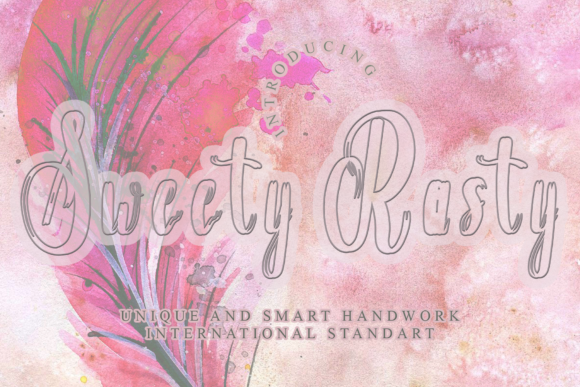
Sweety Rasty: A Handwritten Font for Creative Expression
In the world of design, typography plays a crucial role in conveying emotion, personality, and identity. Among the many fonts available, Sweety Rasty stands out as a bold and unique handwritten font that brings a personal touch to any project. Its fluid strokes and expressive style make it ideal for a wide range of applications, from wedding invitations to business cards, offering a sense of warmth and authenticity that digital fonts often lack.
Unlike standard typefaces, which are typically uniform and structured, Sweety Rasty mimics the natural flow of handwriting. This gives it an organic feel that can enhance the visual appeal of any design. Whether used in print or digital formats, the font adds a human element that resonates with audiences on a more personal level.
The Characteristics of Sweety Rasty
Sweety Rasty is characterized by its distinctive strokes and irregularities that mimic the way a person might write by hand. Each letter has a slightly different shape, creating a sense of movement and energy. This variability makes the font feel more dynamic and less rigid than traditional typefaces.
The font also features a mix of uppercase and lowercase letters that vary in size and spacing, giving it a casual yet elegant appearance. These subtle differences contribute to its overall charm, making it particularly well-suited for projects that aim to convey a sense of intimacy or creativity.
Another notable feature of Sweety Rasty is its versatility. It works well in both large and small sizes, allowing designers to use it for everything from headlines to body text. The font’s legibility remains intact even at smaller sizes, ensuring that it can be used effectively in a variety of contexts.
Practical Applications of Sweety Rasty
One of the most common uses for Sweety Rasty is in wedding invitations. The font’s handwritten style adds a personal and romantic touch, making it a popular choice among couples looking to create a unique and memorable invitation. When paired with elegant paper stock and soft colors, the font enhances the overall aesthetic of the design while maintaining a sense of sophistication.
Beyond weddings, Sweety Rasty is also widely used in thank you cards and greeting cards. Its expressive nature makes it perfect for messages that need to feel heartfelt and genuine. Whether it’s a birthday card, a holiday message, or a simple note of appreciation, the font helps convey emotion in a visually appealing way.
Businesses and entrepreneurs often use Sweety Rasty in logos and branding materials. The font’s uniqueness helps distinguish a brand from competitors, especially in industries that value creativity and individuality. When used in a logo, Sweety Rasty can communicate a sense of approachability and warmth, making it ideal for startups, creative agencies, and boutique businesses.
For designers and artists, Sweety Rasty offers a powerful tool for adding a handmade quality to their work. It can be used in posters, social media graphics, and web designs to create a more engaging and visually interesting layout. The font’s adaptability allows it to fit into a wide range of styles, from rustic and vintage to modern and minimalist.
Advantages of Using Sweety Rasty
One of the main advantages of Sweety Rasty is its ability to add a personal touch to any design. In an age where digital communication dominates, using a handwritten font can help create a more authentic and relatable experience. This is especially valuable in marketing and branding, where building trust and connection with the audience is essential.
The font also provides a strong visual contrast when used alongside more formal typefaces. This contrast can be used strategically to highlight key elements of a design, such as headings, call-to-action buttons, or important information. By combining Sweety Rasty with other fonts, designers can create a balanced and visually appealing composition.
Another benefit of Sweety Rasty is its ease of use. Most design software and platforms support this font, making it accessible to both professional designers and hobbyists. Whether working in Adobe Illustrator, Canva, or other design tools, users can easily integrate Sweety Rasty into their projects without requiring advanced technical skills.
Considerations When Using Sweety Rasty
While Sweety Rasty is a versatile and expressive font, it may not be suitable for every project. In some cases, its irregularity and variation can make it difficult to read, especially in long blocks of text. For this reason, it is best used in short phrases, headlines, or decorative elements rather than as the primary body text.
Designers should also consider the context in which the font will be used. In formal or professional settings, a more structured font may be more appropriate. However, in creative or informal environments, Sweety Rasty can add a refreshing and unique perspective that sets a design apart.
Additionally, it’s important to ensure that the font is properly licensed for the intended use. Depending on the platform or application, there may be specific terms of use that need to be followed. Designers should always verify the licensing details before incorporating Sweety Rasty into commercial or public-facing projects.
Real-World Examples of Sweety Rasty in Action
A local bakery recently used Sweety Rasty in its packaging and marketing materials to create a warm and inviting brand image. The font was applied to the bakery’s logo, menu cards, and social media posts, helping to reinforce the idea of homemade quality and personal care. The result was a cohesive and visually appealing brand that resonated with customers.
An independent artist also incorporated Sweety Rasty into her website and online portfolio. She used the font for her headline, section titles, and captions, adding a handmade feel to her digital presence. This helped differentiate her work from other artists and gave visitors a sense of the artist’s personality and style.
Another example comes from a small event planning company that used Sweety Rasty in its wedding stationery. The font was used for guest names, ceremony details, and table numbers, creating a custom and personalized look that reflected the couple’s preferences. The result was a set of invitations that felt more like a keepsake than a standard printed piece.
Conclusion
Sweety Rasty is more than just a font—it’s a tool for creative expression and visual storytelling. Its unique characteristics make it ideal for a wide range of applications, from weddings to logos, and its expressive style adds a personal touch that can enhance any design. By understanding its strengths and limitations, designers and creators can use Sweety Rasty effectively to bring their ideas to life in a more authentic and engaging way.